
Arrest Warrants in Westmoreland County
When police in Westmoreland County take someone into custody, the paper behind the arrest is usually an arrest warrant. It is court process. A Virginia magistrate, or an authorized judge or clerk, may issue it, after a sworn complaint and a probable-cause review. A summons works differently. It directs a person to appear rather than face immediate arrest. Court level in Westmoreland County turns on the charge. The GDC handles adult misdemeanors, traffic matters, and preliminary hearings in felony cases, while Circuit Court holds felony trials and the criminal record. JDR covers juvenile and domestic-relations matters, with stricter limits on public access.
Who May Issue Westmoreland County Arrest Warrants
Virginia Code §19.2-71 lets a magistrate, and certain judges and clerks, issue arrest process within their authority. Under §19.2-72, the judicial officer reviews the complaint and probable cause before issuing a warrant or a summons. Rule 7C:3 lists the form requirements. The details vary with the charge and the person or agency bringing the complaint. Felony process has extra authorization limits. Nobody gets a felony warrant just by asking. The magistrate or issuing court decides whether the facts and the law support process. Westmoreland County publishes no public online warrant list. For contacts, the Westmoreland Circuit Court page lists its clerk and court details.
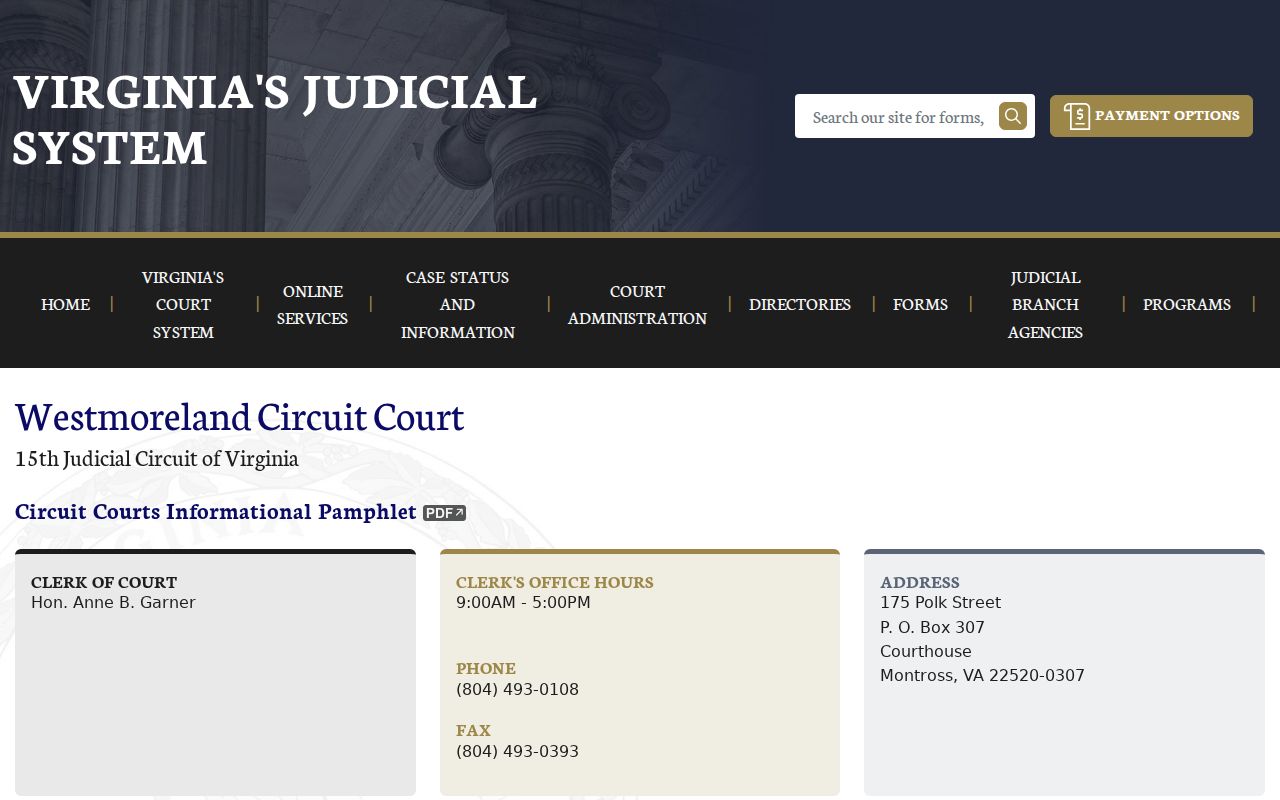
To check a Westmoreland County warrant, read the local court file for the case events, then ask the issuing clerk for its current status.
What a Westmoreland County Arrest Warrant Contains
Westmoreland County posts no public roster and no sample warrant entry. The court file itself is the better source. It may name the accused, the charge, the issuing officer, the date, the return court, and the service status. A search-warrant affidavit follows a different public-access rule, so do not confuse the two records.
| Issuing court | Magistrate, General District, Circuit, or JDR authority as shown on the file |
|---|---|
| Process type | Arrest warrant, summons, capias, or search process |
| Charge and law | Offense or alleged conduct stated in the court record |
| Issue and return | Dates and service information entered by the court or officer |
| Bond direction | Terms set by the court, if any; no countywide amount was found |
| Restriction | Sealed, juvenile, or investigative details may not be public |
Westmoreland Arrest Warrant Complaint-to-Probable-Cause Path
In Westmoreland County, the path starts with a complaint, which goes to an authorized judicial officer. The officer weighs the legal standard. A warrant or a summons may follow. Westmoreland County files may later show the charge and the court events, but they do not expose every protected investigation detail. Ask the clerk which record can be released. Search-warrant affidavits run on their own clock. Virginia Code §19.2-54 generally opens the affidavit after execution or 15 days after issuance, whichever comes first, unless a court temporarily seals it. That timing rule covers search warrants only, not an automatic release of all arrest files. The Virginia complaint and warrant statute spells out the legal path.
How Westmoreland County Arrest Warrants Are Served
The Westmoreland Sheriff's Office serves court process across the county and in Montross. Colonial Beach fields its own town police department. Their Patrol Operations division serves warrants inside town limits. Virginia State Police matters also show up on the Westmoreland GDC Tuesday trial schedule, but whichever officer serves a warrant, the issuing court still controls the case.
Westmoreland Sheriff: court process service
175 Polk Street, Montross, VA 22520
Administration 804-493-0106
Dispatch 804-493-8066
Westmoreland Circuit Court: felony process
Felony case files and criminal process
804-493-0108
Call the court for status and the agency for its own service records.
Westmoreland Arrest Warrants Can Cross Virginia Localities
A warrant does not stop at the county line. Virginia Code §19.2-76 lets an officer execute a warrant, capias, or summons issued anywhere in the Commonwealth. Say the arrest happens outside Westmoreland County. The person goes before a judicial officer for bail handling and any required transfer. Section 19.2-80 sets the timing. It calls for prompt presentation to a judicial officer after a warrant or capias arrest. That framework is statewide. Local courts still control their own case records. If someone is held at Northern Neck Regional Jail, a family member can call there for custody information, then ask the issuing clerk in Westmoreland County about the next date or bond terms. The Virginia cross-locality execution statute covers service of process throughout the Commonwealth.
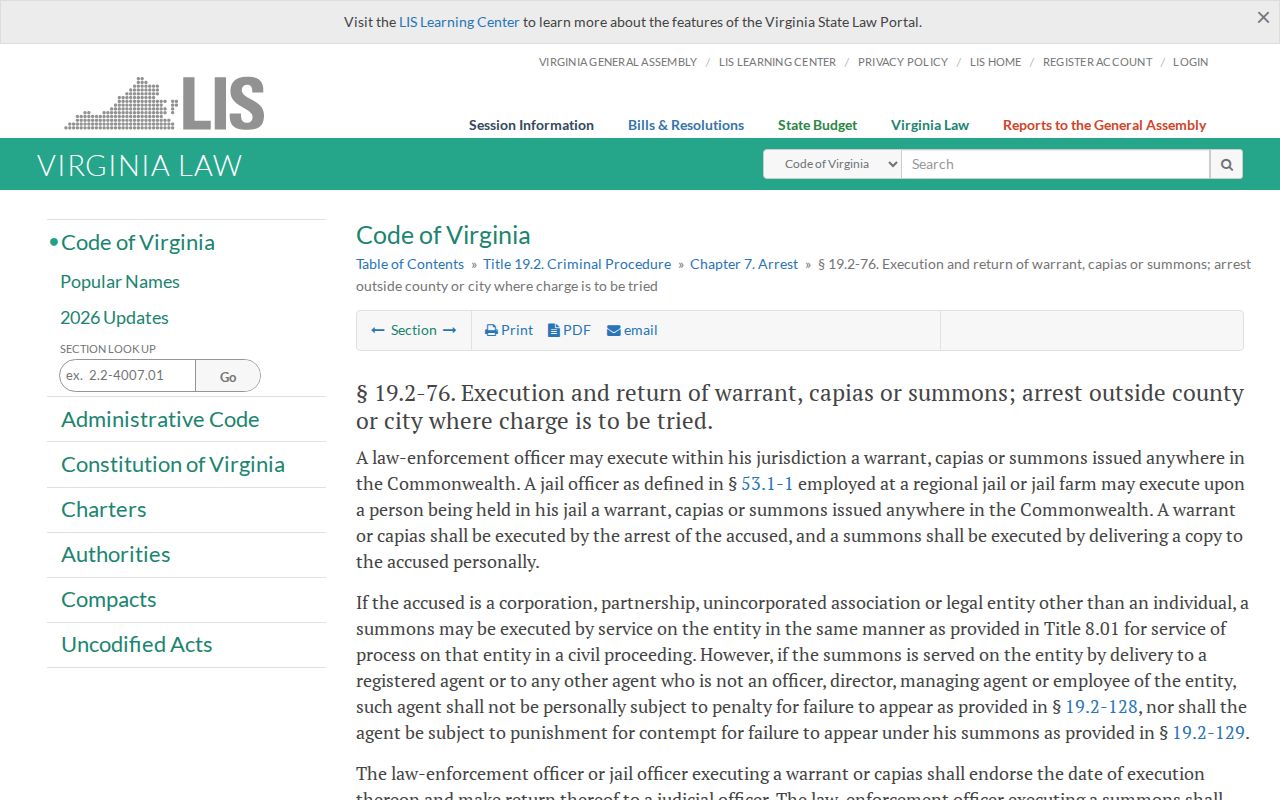
The statute explains service across localities; the issuing clerk still confirms case status.
Arrest Warrant vs Summons vs Bench Warrant
These three papers lead to court by different doors. A summons simply asks someone to appear. An arrest warrant follows a complaint and a probable-cause review. A bench warrant, called a capias in Virginia, usually follows a missed date or another event in a Westmoreland County case already underway.
| Process | Common reason | Local confirmation |
|---|---|---|
| Arrest warrant | Complaint and probable cause | Issuing magistrate or court |
| Summons | Direction to appear in court | Court named on the process |
| Bench warrant / capias | Missed date or court obligation | Court handling the existing case |
The name alone settles nothing about status. Ask which Westmoreland County case and court the paper belongs to.
Westmoreland Arrest Warrant VCIN Entry Is Not Public Search
Virginia Code §19.2-390 requires law enforcement to enter felony warrants and capias into VCIN and NCIC within 72 hours after the receiving agency gets them. Those networks serve criminal-justice work. They are not public search tools. The public Virginia case hub is broader in some ways. It stays a court-case system. It is not a warrant certification. Start with the state case hub for an available case lead. For adult misdemeanor, traffic, or preliminary matters in Westmoreland County, call GDC Clerk Laura Morgan at 804-493-0105. For a felony file, call Circuit Clerk Anne Garner at 804-493-0108.
What to Do If There’s a Westmoreland Warrant for You
Do not test a warrant by walking up to an officer or showing up at a private address in Westmoreland County. That is how arrests happen. Instead, call the clerk. Ask what the file shows, whether a court date is set, and whether the judge expects a motion, a counsel appearance, or a surrender arrangement. A Virginia defense attorney can review the case and lay out your path. The county posts no public surrender hours and no standard warrant bond amount, so expect those answers to vary.
Important: Contact the issuing court or a Virginia attorney before appearing; the judge controls recall, and any bond terms depend on the case.
If an arrest happens anyway, §19.2-80 requires prompt review by a judicial officer for bail or commitment. The Northern Neck Regional Jail holds defendants for the region, but jail custody in Westmoreland County cannot recall the underlying warrant; only the issuing court can do that.
Confirm a Westmoreland County Arrest Warrant and Court Status
Checking a Westmoreland County arrest warrant means going to the court that issued it. For a criminal or traffic case, search the Virginia GDC system and pick Westmoreland General District Court. A felony may not appear there. In that situation, call the Circuit Clerk. Juvenile and Domestic Relations records stay offline, so contact that clerk directly. The Sheriff can also field a FOIA request for existing service or return records, redacted as the law allows. Virginia Code §2.2-3704 lets anyone ask a public body for records it already holds. Name the record with reasonable detail. The statute does not force the Sheriff to build a new list or rule on whether a warrant is executable today. For current routing, use Westmoreland GDC's official page or the Circuit Clerk page.